Mid-Bark, Mid-Crisis: The Portrait Commission That Refused to Behave
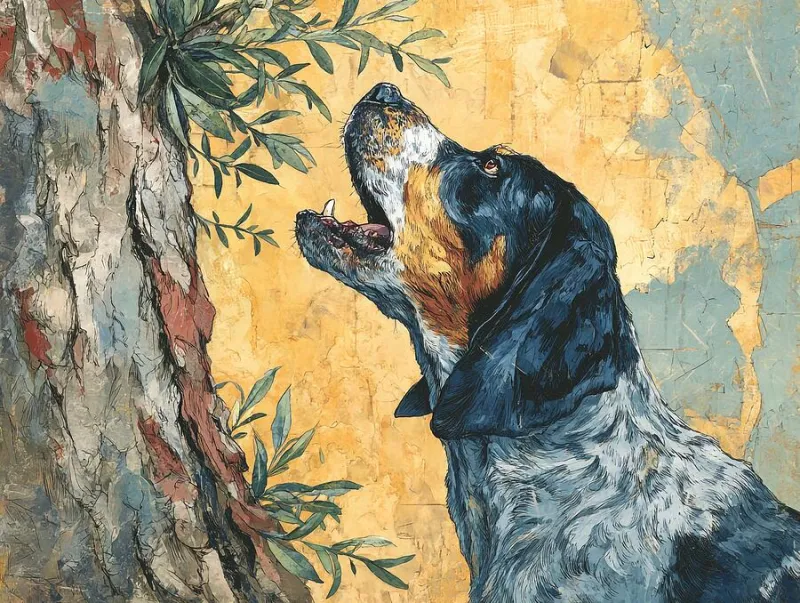
Photo: dog barking portrait painting canvas studio, via images.imagerenderer.com
The request arrived on a Tuesday, in the casual register Americans reserve for favors between neighbors. "Would you paint Biscuit? He's always barking. I want him like that—mid-bark, teeth out, the real him."
I read the message three times. Then I made the mistake every artist makes: I answered honestly instead of strategically. I said yes.
The Brief That Should Have Been a Refusal
Everything I had learned about commissions argued against accepting. Portraiture, in my practice, had always been an exercise in stillness—the sitter composed, the mood negotiated, the likeness flattering enough to justify the invoice. A dog caught at the apex of a bark violated all of it. There is no calm in a barking mouth. There is no composed pose in a thrown-back head and vibrating jowls.
And yet the brief was specific in a way most human sitters never manage to be. This woman did not want a portrait of her dog. She wanted a portrait of her dog's noise. She wanted the moment before the mail carrier retreated, the sound her neighbors complained about, the thing she loved most and apologized for most often.
That is not a small distinction. That is, in fact, the entire distinction.
The Unspoken Contract
Every commission carries a second document beneath the invoice—one neither party signs. The client assumes the artist will render the beloved thing beautifully. The artist assumes the client will accept the beloved thing rendered truthfully. Most commissions never test where these assumptions diverge.
Biscuit's bark tested it immediately. My first attempts were dishonest: I softened the mouth, calmed the eyes, produced a pleasant dog who happened to be making a mild sound. My neighbor looked at the studies and said, with the devastating kindness of people who don't know the vocabulary of critique, "He looks like he's yawning."
She was right. I had broken the contract first—not by failing at the likeness, but by failing at the brief. She had asked for the bark. I had delivered a greeting card.
What the Worst Brief Produces
So I repainted him with the ruthlessness the subject demanded. The mouth open wide enough to see the throat. The ears pinned in the aerodynamics of sound. The body coiled like a spring released. I worked in vermilion and ultramarine, colors I associate with alarm and devotion respectively, because Biscuit seemed to be experiencing both at once.
And here is what I could not have predicted: the painting improved my other work. Painting a bark taught me about the moment of maximum tension—how a figure leaning into speech, a hand mid-gesture, carries more truth than any settled pose. The commission I almost refused became a corrective to a decade of politeness in my own studio.
The Ethics of Saying Yes
I want to be careful here, because the lesson is not "accept every bad brief." The lesson is subtler. We decline work that doesn't fit, and often we should. But "doesn't fit" is a phrase that frequently means "makes me uncomfortable" or "has no precedent in my portfolio." Biscuit had no precedent. He also had, it turned out, a place.
The test I now apply: does the brief ask me to betray my hand, or only to extend it? A client who asks for my style applied to their subject is offering a commission. A client who asks for someone else's style wearing my name is offering a problem. Biscuit's owner asked for the real him—and "the real him" is the one brief every honest artist shares.
Delivered Mid-Bark
The painting hangs in her hallway now, facing the front door, which is fitting: Biscuit painted barking at the door he spends his life barking at. Visitors laugh when they see it. She tells them, I'm told, that it's the only picture of him that looks like anything.
I still turn down commissions. But I turn them down for better reasons now, and I've stopped assuming that the strangest brief in my inbox is the one to fear. Sometimes the request that breaks every rule is simply the rules asking to be renegotiated—loudly, teeth out, mid-bark.