Aluminum Siding at Six O'Clock: Confessions From a Year of Painting the Suburban Ordinary
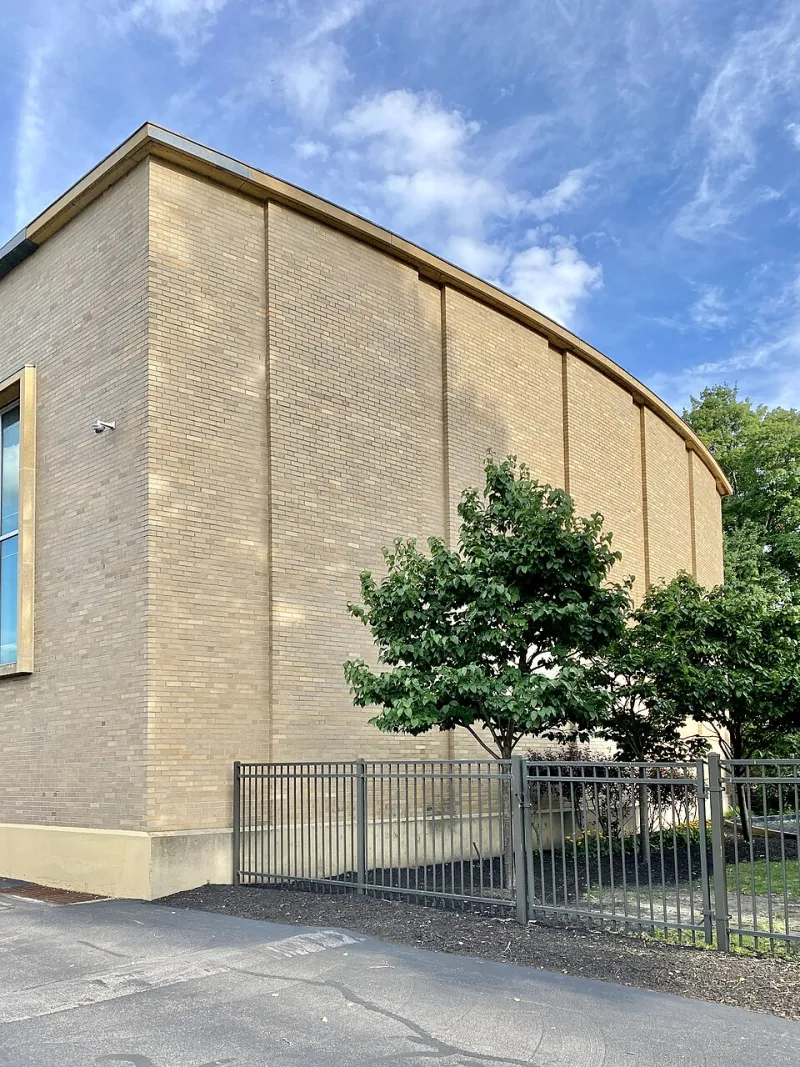
Photo: w_lemay, CC BY-SA 2.0, via Wikimedia Commons
The Vista Nobody Paints
There is a particular hour, somewhere between five and seven in the evening depending on the season, when the aluminum siding of an American split-level does something no museum wall has ever done for me. The corrugated metal catches the low sun and throws it back in bands — not gold, exactly, and not copper, but something closer to a bruised apricot that shifts every ninety seconds as the light drops behind the neighbor's maple.
I have painted this hour for a year now. Not in the mountains, not along any celebrated coastline, but in the cul-de-sacs and carports of ordinary American neighborhoods. And I have come to believe that the suburban vernacular — the mailbox clusters, the garage doors, the precisely mulched islands of dwarf ornamentals — is the most honestly overlooked subject in contemporary landscape painting.
A Blind Spot With a Lawn
Art history has made its peace with the barn and the wheat field. The Hudson River School gave us sublime wilderness; Regionalism gave us the small town; Photorealism, at its best, gave us the gas station and the showroom. But the postwar suburb — the single most common visual environment in which Americans actually live — remains largely unexamined on canvas. We photograph it ironically. We film it menacingly. We almost never paint it with devotion.
I think this is a failure of attention, not of material. The suburb is where the American negotiation between individual longing and collective conformity is staged daily, in vinyl and brick. Every garage door left half-open is a small autobiography. Every HOA-approved shade of greige is a vote cast in a silent referendum. That is not banality. That is a portrait of a nation, painted in a palette nobody thought to mix.
The Rules of My Year
I set myself three conditions when I began. First, no irony: if a painting of a mailbox cluster reads as a joke, I have failed. Second, no ruins and no nostalgia — I am not mourning the suburbs or satirizing them; I am looking at them as they are, this morning, this light. Third, I must paint on location, standing in driveways with permission or on public easements without it, because the work has to carry the temperature of the air.
The carports were the revelation. A carport is architecture that has given up on pretending — a roof, four posts, and honesty. At golden hour, the shadows under them compress into hard geometric shapes that Matisse would have stolen without apology. I painted one in Ohio eleven times. The eleventh finally earned its keep.
What the Light Kept Telling Me
Working from my studio practice, I have always believed that color is memory made physical — that a hue can hold a grandmother's kitchen or a border crossing. The suburbs held a different memory for me, one I did not expect: the memory of arrival. So much of the American story is about arriving somewhere ordinary and deciding to stay. The house paint fades. The shutters warp. And the light, every evening, forgives all of it.
Painting these streets, I stopped asking whether the subject was worthy of the canvas and started asking whether my attention was worthy of the subject. That inversion changed everything else in my practice. It slowed my hand. It made my palette warmer and less certain. It taught me that the deliberately ordinary is not the absence of beauty but its most democratic distribution — available to anyone standing in a driveway at six o'clock with forty minutes of usable light and a small panel on a lap easel.
Toward an Exhibition
The year closes with thirty-one finished panels and a proposal I am calling, simply, Golden Hour, Zip Code. I want these paintings hung at eye level in a grid, close together, the way the houses themselves stand — close enough that their colors argue. No labels beyond street names and times. The viewer can decide whether they are looking at a document or a love letter.
I know which one I mean. The suburbs taught me that devotion does not require a spectacular subject. It only requires showing up, evening after evening, until the aluminum siding tells you what it knows.