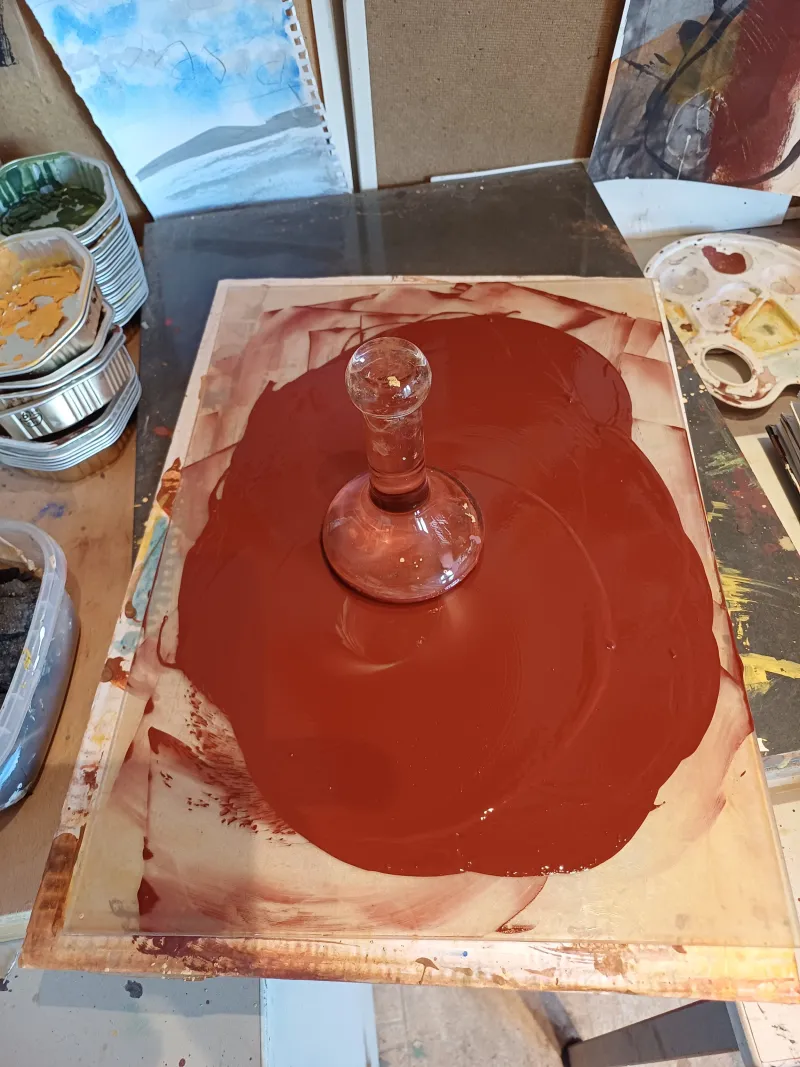
Living Without the Loudest White: A Studio Manifesto on Titanium
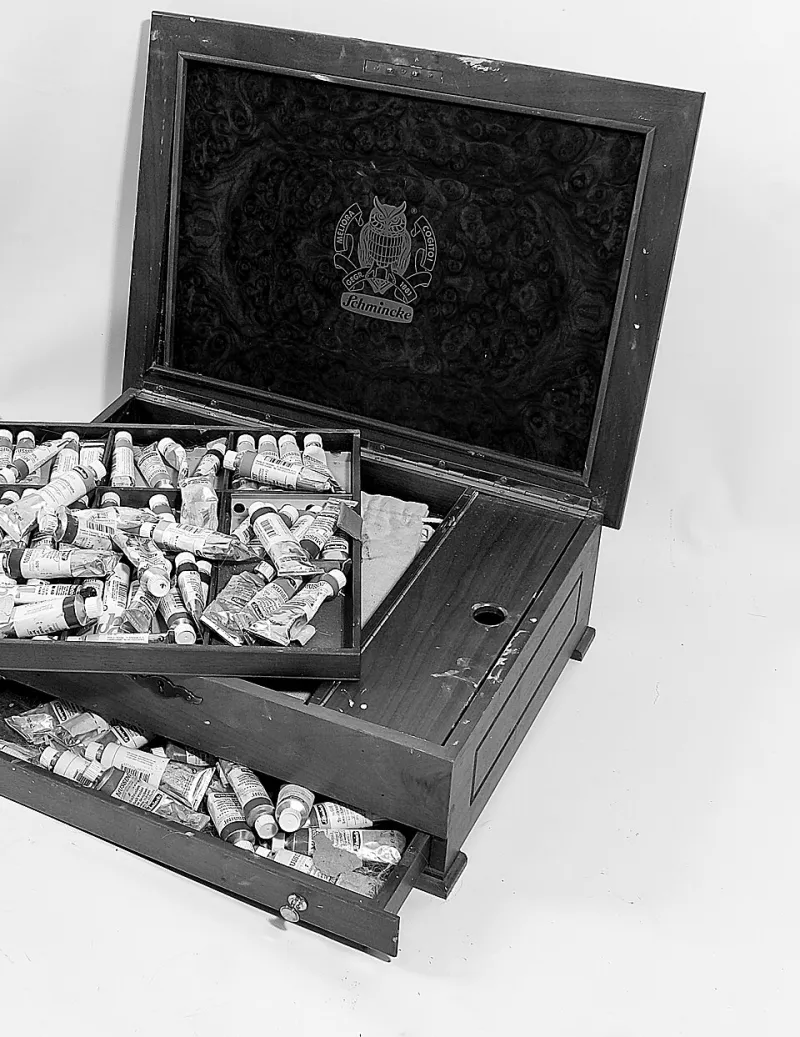
Photo: Vadim Cole, CC BY-SA 4.0, via Wikimedia Commons
The Pigment That Ate the Twentieth Century
Titanium white arrived in American studios like a highway arrived in a small town: overwhelmingly, permanently, and with the promise of convenience. Patented as a pigment in the early twentieth century and commercially dominant by the 1940s, titanium dioxide offered painters an opaque, chemically inert, brilliantly reflective white at a price lead carbonate could never match. It is in your house paint, your sunscreen, your toothpaste, and almost certainly your paint box.
I used it faithfully for two decades. Then, during a period of experimentation with historical palettes, I left it out of a single still life — and something in the painting looked back at me that had not looked back in years.
I have not bought a tube since. Three years now. This essay is my accounting of why.
What Titanium Does to a Mixture
The technical problem is opacity. Titanium white is a hiding pigment of enormous tinting strength. Mix it into cadmium red and you do not get a lighter red; you get a red wearing a shroud. Every mixture it touches goes chalky, cooler, more opaque, more physical. It flattens luminosity into surface.
Compare this to the alternatives. Zinc white, translucent and weak, lets a glaze stay a glaze. Lead white, the old master's companion, builds velvety body without strangling color. And then there is the radical option: no white at all, letting the white of the ground do the work of light. A pale passage on raw canvas or gesso is not paint describing light — it is light, arriving through paint.
Constraint as a Palette-Maker
Here is my actual argument, and it extends beyond one pigment: a personal palette is not built by adding. It is built by refusing.
Every painter I admire has a list of refusals. No black. No medium beyond solvent. No solvents at all. The refusal is not asceticism for its own sake. It is how a painter's hand becomes identifiable. Abundance produces generic mixtures; limitation produces a signature.
Without titanium, I had to relearn value. Highlights became decisions about the ground, about thinness, about where the panel itself could shine through. Shadows deepened because my lights could not cheat. My color warmed, because opacity was no longer available as a correction. The paintings got harder to make and, I believe, more mine.
The Objection, and My Answer
The obvious rebuttal: Sargent used lead, Vermeer used lead, and the Impressionists built an entire optics of light on opaque white. Great paintings have been made with every white in the catalog. I concede all of it.
I am not claiming titanium ruins paintings. I am claiming that for this painter, at this stage, its convenience was a substitute for attention. Removing it forced me to slow down at exactly the moment my work had gotten too fluent, too easy, too much like itself.
An Invitation, Not a Command
I am not asking anyone to throw out a tube. I am asking painters to try a season of subtraction — remove the one color you reach for without thinking, and see what the absence teaches. The palette you refuse is the palette you deserve. Mine, for now, is zinc, lead, and the raw light of the panel. It is a smaller world, and in it I can finally see.