The Deliberate Look: Five American Museums, Five Paintings That Retrained My Eye
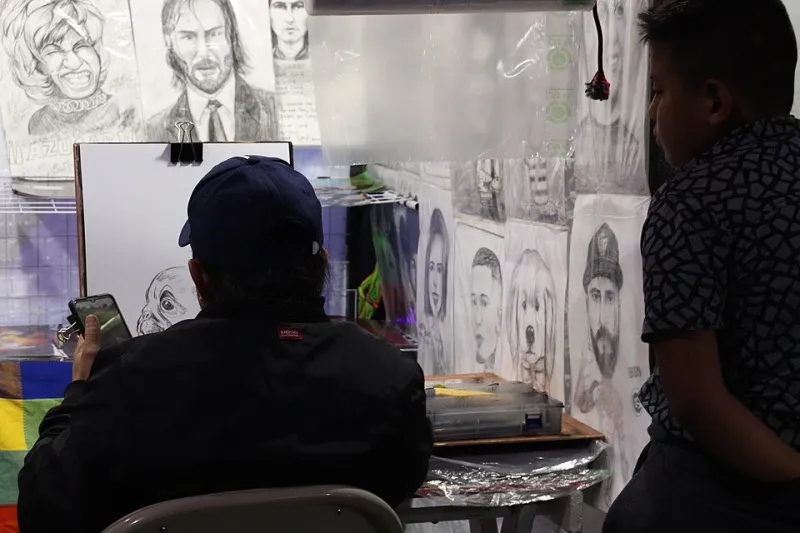
Photo: Ehécatl Cabrera, CC BY-SA 4.0, via Wikimedia Commons
Why You Need One Painting, Not One Hundred
A museum can be the most dangerous place for a working painter. You walk in with good intentions and leave three hours later with a retina full of masterpieces and nothing absorbed. Somewhere around my tenth visit to the Phillips Collection in Washington, I adopted a rule that changed my practice: one visit, one painting, forty minutes. Look until looking becomes seeing.
What follows is the itinerary I now give to students and to any artist passing through an American city with two hours to spare. Each stop pairs a single, often overlooked work with the specific lesson it handed me. Take it as a route, or steal the method and build your own.
1. The Phillips Collection, Washington, D.C.
The painting: Pierre Bonnard's The Open Window (1921) — and yes, in a building famous for Rothko's gallery, I am sending you to the Bonnard.
The lesson: Complementary color as emotional temperature. Bonnard's violets against his yellows are not decorative; they are a argument about interior warmth against exterior light. I spent an hour in that room and went home and repainted a canvas I had considered finished, cooling every shadow by a half-step. Sit on the bench. Count how many distinct purples you can find before you count anything else.
2. Museum of Fine Arts, Boston
The painting: John Singer Sargent's The Daughters of Edward Darley Boit (1882).
The lesson: The power of the unresolved. The two eldest girls dissolve into shadow so completely that the painting becomes a study in how much you can withhold. I learned from it that a palette can be nearly monochrome and still hold a viewer if the value structure is ruthless. Before your visit, decide what you will not look at. Then stand before the deep brown darkness at the edges and study why it works.
3. Smithsonian American Art Museum, Washington, D.C.
The painting: Milton Avery's March on the Beach — or whichever Avery the current hang offers; his small canvases rotate, and any of them will do.
The lesson: Reduction without simplification. Avery flattens a scene into a handful of unmodulated color shapes, and yet nothing feels childish. When I struggle with overworking—and every painter I know struggles with overworking—I ask what Avery would cut. Usually: half the values, all the fussy edges, and every color that appears only once.
4. American Folk Art Museum, New York
The painting: Whatever unattributed 19th-century portrait is currently on view from the permanent collection. The museum's holdings rotate, and that is part of the point—these painters were not famous, and their names are often lost.
The lesson: Untrained conviction. Folk portraiture gets the face right and everything else wrong, and the wrongness—flattened perspective, arbitrary local color—produces a strange authority that academic painting spends decades trying to recover. I leave this museum reminded that rules I treat as laws are, in fact, choices.
5. The Art Institute of Chicago
The painting: Everyone sends you to American Gothic or the Seurat. I send you to Ivan Albright's That Which I Should Have Done I Did Not Do (1931–41).
The lesson: Restraint as accumulation. Albright's surface is obsessive—decades of tiny strokes—yet the palette is so controlled, so gray-green and funereal, that the excess reads as discipline. It taught me that density and restraint are not opposites. You can paint a picture for years if every mark obeys the same law.
How to Look: A Short Protocol
The itinerary only works with a method. Mine is simple. Before entering the gallery, write down one question about your current studio problem—How do I handle warm light on white? or Where should my edges soften? Stand before your chosen painting for ten minutes without speaking or photographing anything. Then sketch it, badly, in a pocket notebook. The bad sketch reveals more than the good photograph, because it forces you to make the artist's decisions yourself.
Then leave. One painting, honestly studied, will follow you back to the studio. A hundred will not.