Ledger in Vermilion: What a Year of Painting on Borrowed Money Actually Costs
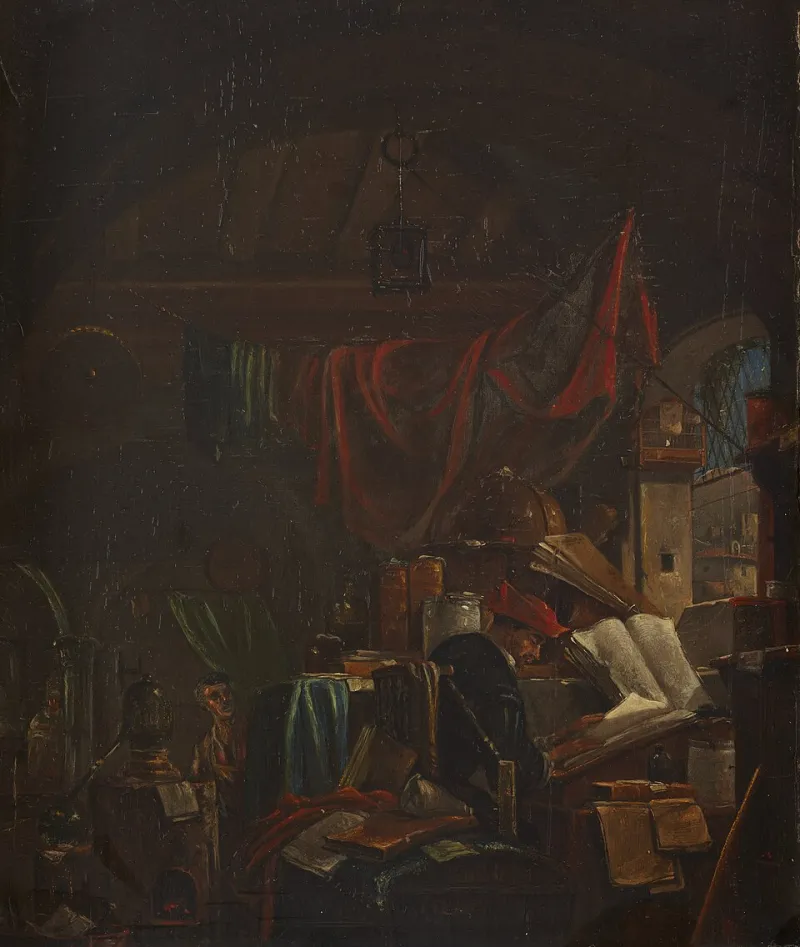
Photo: Wyck, Thomas, approximately 1616-1677, Public domain, via Wikimedia Commons
There is a particular silence that follows the moment you realize the money for rent and the money for cadmium red cannot both come from the same envelope. I have sat with that silence many times, usually at my kitchen table in a small apartment where the radiator clanks like an impatient critic. And I have, more often than I care to admit, chosen the red.
This is not a piece about being irresponsible. Or maybe it is. I will let you decide after you see the numbers.
The Arithmetic Nobody Puts on the Gallery Wall
Last January, I started keeping a ledger — not for taxes, but for truth. I wanted to know, precisely, what a year of sustaining a painting practice costs when you live in a city where a one-bedroom eats two-thirds of a modest income.
Here is what the ledger says. Oil paint, the honest kind with real pigment and real lightfastness, ran me about $1,900. I stretch my own canvases, which softens the cost, but linen, bars, gesso, and staples still came to roughly $1,100. Solvents, mediums, and varnish: $340. Brushes, replaced as they died rather than as I wished: $260. Crating and freight for three group shows: $640. Framing, always the quiet thief: $520. Miscellaneous — palette knives, sandpaper, the good masking tape, the emergency tube of something I absolutely needed at 9 p.m. on a Tuesday — about $300.
The total lands just under $5,100. Spread across twelve months, that is $425 a month, which sounds survivable until you stack it against a security deposit, a dental emergency, or a winter heating bill in a drafty building. It is a car payment. It is also, for me, the entire material cost of a year of being who I am.
Choosing Between the Deposit and the Pigment
The year I moved into my current apartment, I had exactly enough saved for the deposit and first month's rent. Standing in the paint store two weeks later, I held a tube of genuine vermilion — not the hue-matched substitute, the real thing, ground from mineral and history — and I bought it. I ate rice and beans for eleven days. I do not regret it. I painted a series that spring about heat, warning, and the body, and every canvas in it began with that tube.
I want to be careful here. Financial precarity is not romantic, and I would never suggest hunger improves anyone's brushwork. Landlords do not accept pigment as payment, and the stress of scarcity has ended more promising practices than it has sharpened. But there is a specific kind of clarity that arrives when every purchase is a decision rather than a habit. When I cannot buy twenty colors, I buy three and learn them until they become twenty. When a canvas is precious, I mix on the palette for an hour before touching the surface — and that hour of looking is often where the painting actually gets made.
Constraint, it turns out, is a kind of editor. It deletes the decorative and keeps the essential.
What I Do Not Spend On
The ledger has another column, and it might matter more than the first. I do not spend on a separate studio; I paint in my living room and have learned to make eleven hundred square feet of domestic life share space with an easel. I do not buy the newest gadget, the fanciest varnish, the subscription box of mystery supplies. I buy linen because it holds a memory of touch better than cotton, but I buy it on sale, in bulk, with the patience of someone who knows next season's paintings before they exist.
I also do not spend on silence about money. I talk about it with painter friends the way we talk about mediums and drying times. Secrecy around finances is how artists stay isolated and underpaid. The ledger, shared, becomes a kind of solidarity.
The Red, Reconsidered
People sometimes ask why I do not simply paint less, or cheaper, until circumstances improve. But circumstances do not improve by waiting in a room with no paintings in it. The practice is not the reward for financial stability; it is the engine that keeps me looking for it.
So yes: I still paint with money I do not have, budgeted against a spreadsheet and justified by a conviction I cannot invoice. The rent gets paid — late, sometimes, but paid. And the red gets used. On the good days, I believe the paintings know the difference. They carry in them the weight of every choice, every tube weighed against every deposit, and they are more honest for it.
The ledger for this year is already open. The first entry is vermilion.