The Tiles That Taught Me Color: A Memoir of Kitchen Light and Cobalt Blue
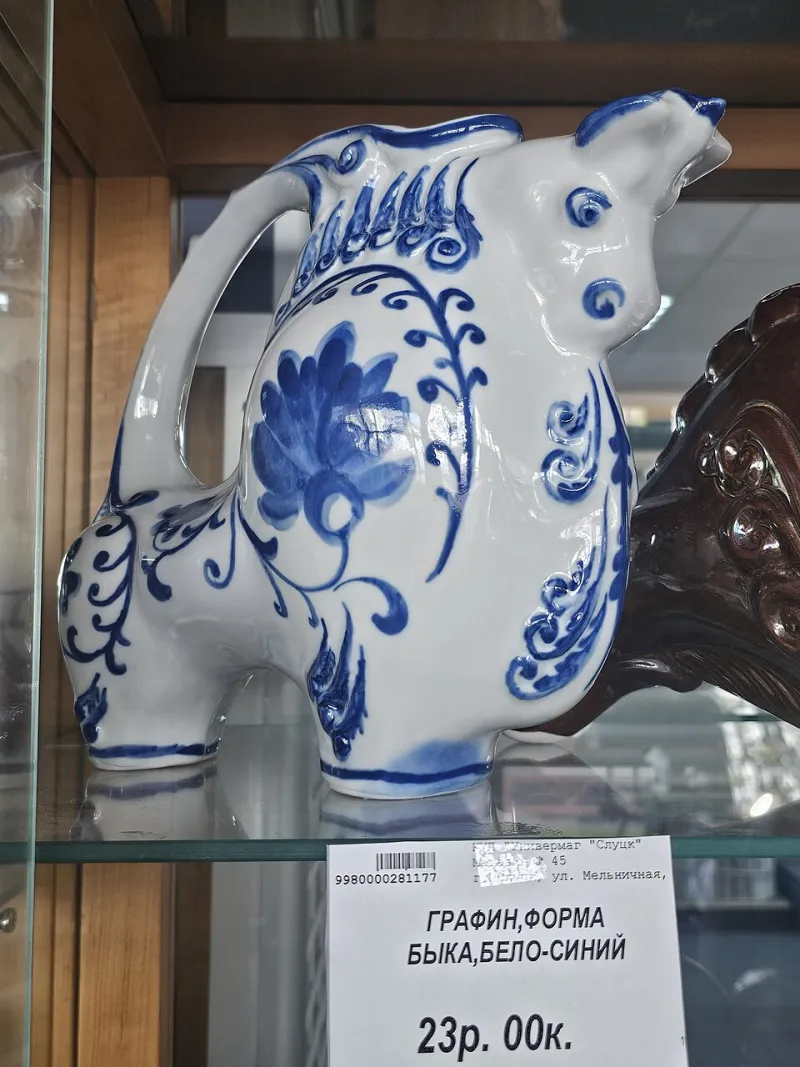
Photo: Agbarto, CC BY-SA 4.0, via Wikimedia Commons
A Wall I Have Never Forgotten
Every artist I know can point to a moment — usually early, usually unremarkable at the time — when color stopped being decoration and became feeling. For me, that moment happened on a Tuesday afternoon in a kitchen that no longer exists, standing on a chair I was probably not supposed to be standing on, pressing my palm against cool ceramic tiles the color of deep seawater.
My grandmother's kitchen was a study in contrasts that no color wheel could have planned. The lower half of the walls wore hand-painted tiles in a saturated cobalt, arranged in a repeating pattern of eight-pointed stars. Above them, everything went pale: whitewashed plaster, bleached linen curtains, a wooden table scrubbed so many times it had turned the color of weak tea. Sunlight entered through one window and behaved differently depending on where it landed. On the cobalt, it deepened. On the plaster, it dissolved.
I did not have the vocabulary then. I do now: that kitchen taught me about temperature, contrast, and the emotional weight of saturation before I ever learned the terms.
Memory Is Stored in Pigment
When I began formal training, my instructors talked about color theory in the language of complements and harmonies. Useful, certainly. But the palette I return to under pressure — the one that surfaces in my canvases whether I intend it or not — is not academic. It is domestic.
Cobalt blue means safety to me. That specific blue, the one you can find in vintage ceramic glazes or in the tiles of older homes across the Mediterranean and Levant, carries the smell of cardamom coffee and the sound of a radio playing faintly from another room. When I paint it, I am not choosing a hue. I am choosing a feeling of being seven years old and unafraid.
This is the quiet secret of many artists' visual languages: our earliest palettes are chosen for us, absorbed through walls and tablecloths and the particular yellow of afternoon light in a childhood hallway. We spend our careers either echoing it or pushing against it — but rarely ignoring it.
Translating Memory Without Sentimentality
Here is the practical difficulty: memory is not a color swatch. If you paint your grandmother's kitchen literally, you risk producing nostalgia — pleasant, inert, and finally dishonest. Nostalgia smooths everything down. Memory, honestly rendered, keeps its friction.
Over years of practice, I have developed a few working rules for translating remembered spaces into paint:
1. Paint the temperature, not the object. I never paint the tiles themselves anymore. I paint the coldness of the ceramic against a hot afternoon — a blue that feels like air conditioning in a house that had none.
2. Let one color carry the weight. In my kitchen series, cobalt appears once per canvas, often in a small area. Restraint keeps the memory legible. Saturation everywhere is saturation nowhere.
3. Accept distortion. Memory compresses and exaggerates. The tiles in my paintings are larger than they ever were, the light more dramatic. That distortion is the truth of the memory. Accuracy belongs to photography.
4. Pair the palette with a texture. Color rarely travels alone. For me, cobalt always arrives with a glossy surface — enamel, resin, glazed ceramic fragments embedded into the canvas. The texture completes the recall.
An Invitation to Mine Your Own Rooms
If you are an artist searching for a visual language that feels authentic, I would suggest starting not with the museum but with the rooms you grew up in. Ask yourself: What color did safety look like? What color was anxiety? Which wall did the good light hit at 4 p.m.?
You may find, as I did, that the answers are already in your work — recurring in the underpainting, the backgrounds, the choices you thought were stylistic preferences but were actually inheritance.
My grandmother has been gone for many years now, and the kitchen was renovated long before that. The tiles went to a landfill somewhere between two families. But on my studio wall in New England, on gray February afternoons when the light outside offers nothing, I mix a cobalt that is not quite any cobalt on the market — a little warmer, a little more forgiving — and the room fills, briefly, with the particular safety of a kitchen I once stood in on a chair, touching a wall, learning my first palette by hand.