The Devotion Economy: What Painting Other People's Beloved Things Taught Me About Love in America
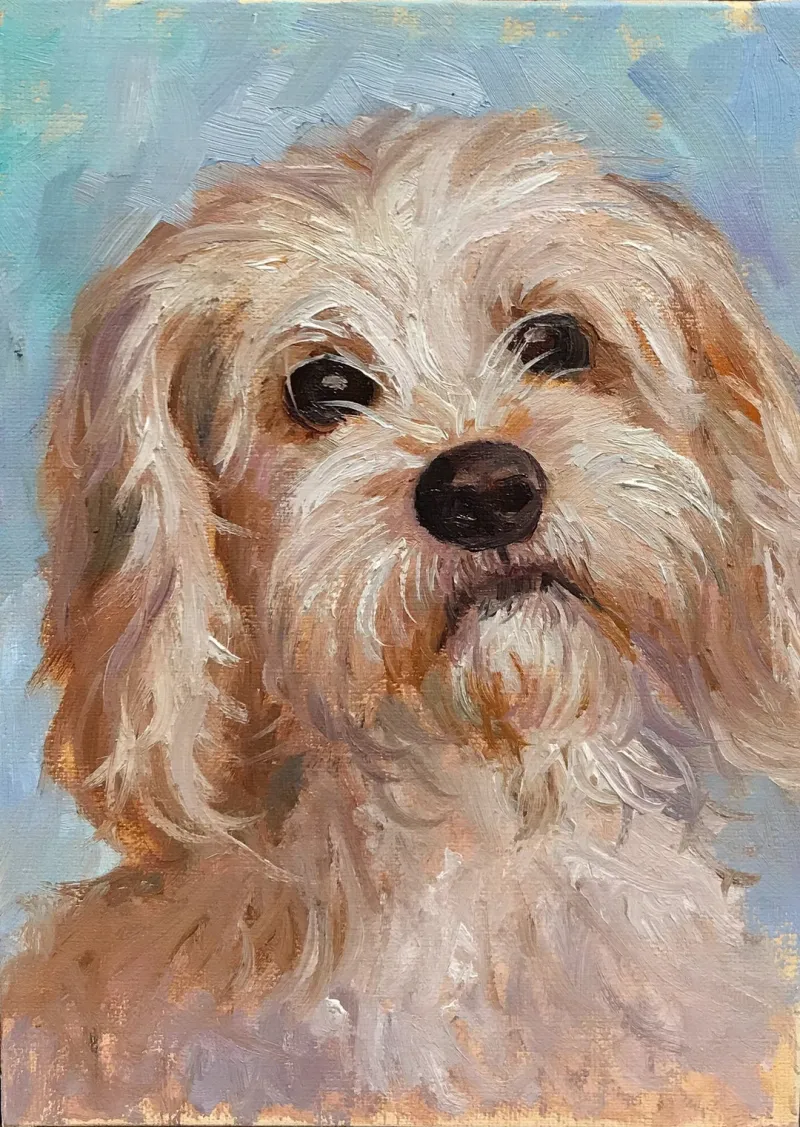
Photo: artist painting small portrait of dog in home studio warm light, via i.etsystatic.com
The Commission That Started It All
The email arrived on a Tuesday in February, in the way these emails always do — apologetic, tentative, half-embarrassed. A woman in Ohio wanted to know if I would consider painting her late husband's fishing boat. She had a photograph, she said, taken sometime in the nineties, and she understood if this wasn't the kind of work I did.
It was not, strictly speaking, the kind of work I did. My gallery CV listed exhibitions in three states and a series of large abstractions that had taken me two years to complete. But something in the phrase his fishing boat — the possessive doing so much quiet work — made me write back within the hour. Yes. I would paint the boat.
That single yes became a year of yeses. A beagle named Gus, rendered in warm umbers against a lawn the color of a postage stamp. A 1967 Mustang in Guardsman Blue, its owner standing beside it the way one stands beside a parent. A front porch in Savannah with a rocking chair that had outlived both the people who bought it. Twelve commissions in all. None of them large. None of them, by the standards of the art world, important.
And yet I have begun to suspect they are the most honest works in my catalog.
What People Ask For When They Ask for a Painting
Here is what I learned quickly: nobody commissions a painting of a thing they merely like. Nobody sends me a photograph of their microwave or their commute. The requests that arrive — and they arrive steadily, through word of mouth and the small back channel of neighbors telling neighbors — are always requests for devotion made visible.
A man in Vermont wanted his father's hands painted. Not his father's face, not his father at the workbench. Just the hands, weathered and enormous, holding a whittling knife. When I delivered the painting, he held it against his chest the way you hold something that might still be warm.
This is the emotional economics of the small commission: the client brings not just a photograph but an entire private history, and asks you to translate it into pigment. You are not selling your skill. You are being trusted with someone's grief, or gratitude, or stubborn refusal to let a thing pass unrecorded. The check they write covers the paint. The rest is faith.
The Hierarchy We Inherited and Should Question
The art world maintains a quiet hierarchy, and those of us trained inside it absorb it early. The personal work is the serious work. The commissioned work — especially the sentimental commissioned work — is the work you do to pay rent, the work you don't photograph for your website.
I believed this for fifteen years. I believed it right up until the month I spent painting Gus the beagle and found myself more fully absorbed, more technically alert, more emotionally exposed than I had been in front of any canvas I claimed was for myself.
Why? Because abstraction lets you hide. You can gesture toward feeling, keep your distance, retreat into the safety of it means whatever it means. But when a widow asks you to paint her husband's boat, there is nowhere to stand. The painting will either hold her love or it will not. There is no critical theory to hide behind, no biennale context to flatter you. It is you, the pigment, and the weight of what she gave you.
A Portrait of American Love, Painted in Installments
Taken together, my twelve commissions form something I did not expect: a portrait of ordinary American devotion. Not the love of movies — grand, declarative, soundtracked — but the slower love that accrues around objects. Boats. Cars. Porches. Dogs. The things Americans choose to remember themselves by.
There is a particular kind of tenderness in this country's relationship with its possessions, and it took an outsider's eye — mine, trained on Mediterranean light and family archives — to see it clearly. The fishing boat is not a boat. It is every Saturday morning of a marriage. The Mustang is not a car. It is a man's proof that he was once young. The porch is not architecture. It is a promise that some evenings will always come back.
Why These Works May Matter Most
I still paint my abstractions. I still chase the large, difficult canvases that keep a studio practice alive. But I no longer speak of the commissions as lesser work, and I would gently push back on any artist who does. A painting that someone weeps in front of, that hangs in a hallway in Dayton where it is seen every single day by the person it was made for — that painting is doing more work in the world than most of what hangs in climate-controlled silence.
The fishing boat was delivered in June. Last month I received a photograph: the painting above a mantel, flanked by two candles, and beside it a card that read, simply, You gave him back to me.
No red dot, no review, no sale I have ever made has felt like that sentence. Call it sentimental. I have decided to call it the point.