Signed Before the Keys: What Sellers Ask Me to Leave Out of a House Portrait
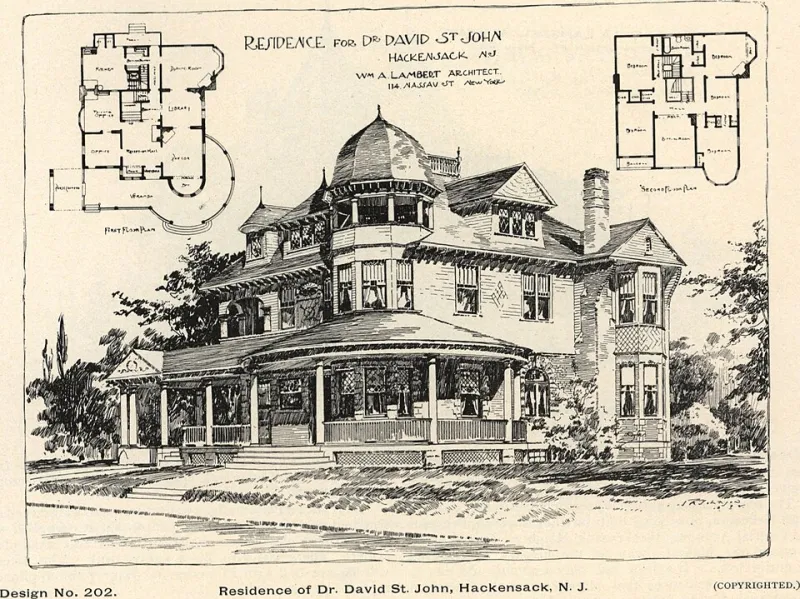
Photo: Wm A. Lambert, No restrictions, via Wikimedia Commons
The email usually arrives in the last ten days before closing, and it usually apologizes for the timing. A seller has accepted an offer, the boxes are out, the walls are patched to a color the hardware store calls something like Cathedral Fog, and only then does it occur to them that they would like the house painted before it stops being theirs.
I have taken fourteen of these commissions in the past three years. I have learned to ask a specific set of questions before I ever set up an easel, because a house portrait is rarely a request for a likeness. It is a request for a version.
The Request Arrives Late
Nobody orders a house portrait a year in advance. The commission is almost always a response to a deadline — the closing date acting as a small, bureaucratic memento mori. The urgency is not aesthetic. It is procedural: something must be made before a signature makes it impossible.
I charge the same for these as for any portrait of comparable size, and I say plainly that I cannot guarantee a finished canvas before a date that may move. Most people accept this. Two have asked me to work from photographs instead, and I have declined both times, because a photograph of a house is a record of a house, and what my clients are after is fuzzier than that.
What Sellers Ask Me to Keep
Almost without exception, sellers want the house as it looked in a season they consider representative. A couple in a Cleveland suburb, thirty-one years in the same colonial, asked me to paint it in late September — specifically the week before the maples turn, because, in the wife's words, that is when the house looks like itself.
They also asked for the porch light to be on. It was two in the afternoon in the painting. I left it on.
Others ask for the tree they planted, the brick walk their son laid the summer he was nineteen, the mailbox with the dent from a plow. These are not decorative choices. They are arguments about authorship. A house portrait is often the last chance a person has to say, in paint, I did that, and I did it here.
What Sellers Ask Me to Erase
Every commission includes a list of things to remove, and the lists are more revealing than the requests. A woman in Phoenix asked me to leave out the dead citrus tree in the side yard, then called back four days later and asked me to put it back in, because the tree had been her husband's project and its failure was part of the story. I repainted the background twice.
One seller asked me to omit the neighbor's trampoline, visible over the fence and bright as a warning buoy. Another asked me to move a utility pole twelve feet to the left, which I did, and which I have regretted, because the painting is now a small, well-executed lie.
The most common deletion is not an object but a condition: they want the house without the sign in the yard, without the staging furniture, without the realtor's lockbox on the door. They want the building to look as though no transaction has ever touched it. I understand the impulse. I also find it the hardest thing to deliver honestly, because the transaction is the reason I am there.
The Buyer on the Other Side
Twice now I have been hired by the incoming owner, and both times the request was stranger and better. A buyer in Rhode Island asked me to paint the house as the previous owner had left it — the same white shutters, the same overgrown hydrangea, the same storm door with the bent closer — rather than as it would look after her renovation. She wanted, she said, the version she had walked through on the second showing, before she had any right to it.
That is a different commission entirely. The seller wants the house as it was when they were happy in it; the buyer wants the house as it was when they first wanted it. Both are portraits of a moment rather than a structure, and the structure is nearly incidental.
The Threshold Problem
I have come to think of these paintings as threshold objects, made in the narrow interval when a house belongs to no one in particular. The seller has emotionally vacated. The buyer has not yet arrived. The building stands there with the grass cut and the rooms empty, and for a few days it is genuinely unowned, which is a condition that almost never gets painted.
So I paint the light on the siding and the shadow of the gutter and the crack in the walk, and I take the client's list, and I make my small, negotiated adjustments. Then I hand over a canvas of a house that is already, by the time the varnish is dry, no longer the house in the painting.
That is the job. Someone has to sit in the driveway in the cold and hold still long enough to say what was there.