Chrome, Oil Stains, and the Quiet Dignity of the Cul-de-Sac: A Season Painting My Street's Driveways
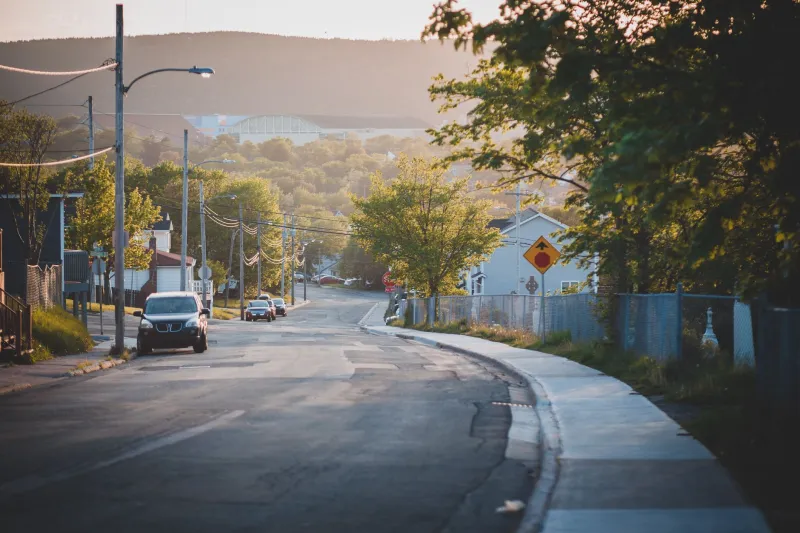
The Easel at the End of the Curb
There is a stubborn belief, passed down through every still-life course I ever took, that significance lives indoors — on the tabletop, under the controlled lamp, among the arranged pears and pewter. Last September I decided to test that belief against the asphalt. I carried a French easel, a folding stool, and a thermos to the end of my cul-de-sac in Ohio, and I began to paint driveways.
Not houses. Not gardens. The driveways themselves: the cracked concrete, the oil constellations, the green plastic sled abandoned since July, the minivan with the peeling swim-team decal. For one full season, three driveways on my street became my subjects — the Hendersons' at number 14, the one with the basketball hoop at 21, and the wide gray slab belonging to the retired couple who still wash their sedan every Sunday, without fail, at eight in the morning.
What the Light Does to Chrome
Suburban light is a specific phenomenon that no one has properly painted since Hopper, and Hopper mostly preferred gas stations. Driveway light is harsher and more democratic. It arrives unfiltered over the garage rooflines, strikes the hoods of parked cars, and throws reflections of power lines and clouds onto surfaces engineered to be washed weekly.
Painting chrome in that light is a lesson in humility. The bumper of the Hendersons' pickup held, at various hours, the entire street upside down — my easel included, a small smudge of myself in cadmium red at the fender's curve. I learned quickly that the driveway still life is never a still life. The oil stains spread and darken like slow weather systems. The basketball hoop's shadow migrates across the concrete with the seasons, a sundial no one consulted.
Three Driveways, Three Families
The driveway at number 21 told its story in scuffs. Skateboard marks fanned out from the garage in gray arcs, overlapping like brushwork. A hoop stood at the pavement's edge, its net gone to three frayed strands. By November the bicycle that had leaned against the garage since September was gone, and I found I missed it the way one misses a color mixed but never used.
The Sunday sedan across the street was a different discipline entirely. Its driveway was swept, sealed, and bordered by brick pavers laid with obvious pride. Painting it felt like portraiture of a marriage — decades of maintenance, of showing up, of washing the same car in the same light. I never met the couple; I only ever heard the garden hose.
And the Hendersons' driveway was pure abundance: a cooler, a rake, a tricycle, a second car that never moved, a garbage bin with a hockey sticker. It was a still life that composed itself weekly and refused to be tidied.
The True Front Porch
We keep telling ourselves the front porch is the stage of American domestic life, but the porch has retired. The driveway is where the country actually stands — where teenagers shoot free throws until the streetlights argue with them, where garage sales happen, where fathers teach reverse parking with the patience of saints, where the neighbors' actual lives are parked in plain view.
A driveway is a public confession. You can read a household's comings and goings in its stains the way a paleontologist reads strata. The basketball that rolled under the sedan in October and stayed there. The chalk drawings, half rain-erased, of a hopscotch court no adult drew.
What the Paintings Kept
By the first frost I had eleven canvases, none larger than sixteen by twenty, all painted standing on pavement that hummed with the vibration of passing school buses. I gave prints to two of the three families. The Hendersons laughed, then went quiet looking at theirs, and the wife pointed to the tricycle in the corner of the painting and said her son had outgrown it that week. That is what the driveway still life does. It catches the household at the exact width of a moment, before the tricycle is sold at the garage sale and the hoop comes down and the sedan is finally, reluctantly, replaced.
I still paint tabletops. But I no longer believe significance requires arrangement. Sometimes it is already there, twenty feet of concrete, waiting for someone to pull up a stool and pay attention.