When the Street Keeps Its Own Light: Painting Closed Storefronts After a Storm

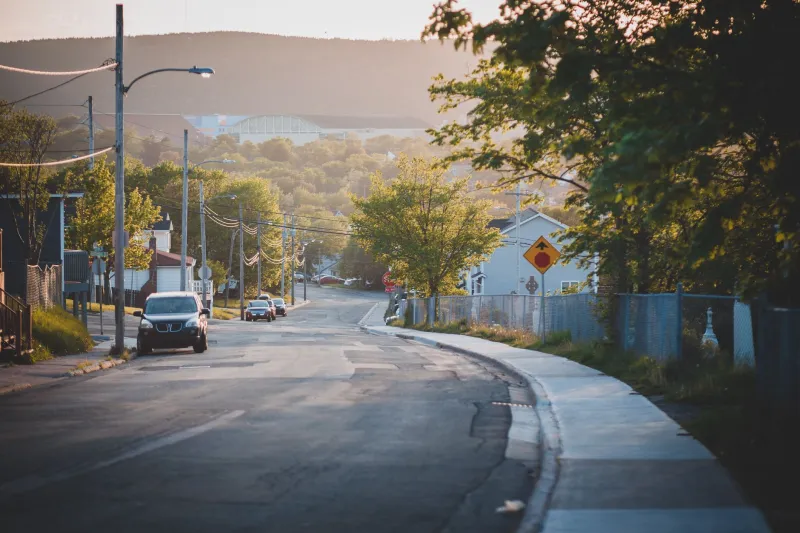
Photo: wet small town main street neon sign reflection at dusk, via imgcdn.stablediffusionweb.com
The rain came late on a Thursday in a town that had one traffic light and a motel sign missing its final letter. I had come to sketch the storefronts before they were repainted, but the storm arrived first and changed the assignment. The sidewalk turned black and glossy. The neon, still humming above an empty parking lot, did not simply shine. It doubled. It lay down in the water and wobbled there, a second sign with no owner and no address.
I stood under a bank awning for forty minutes and watched the street become a canvas that had not asked permission. That was the beginning of a season spent painting Main Streets after rain, in towns where the pharmacy closed at six and the diner kept its lights on for the people who worked late.
The Sign Is Not the Building
Old neon is a civic document. It records what a town believed about itself when it bought the sign: that travelers would stop, that a barber would be needed, that a plate of eggs could be sold at midnight. The motel sign says vacancy even when every room is full. The barber pole turns without a barber. The diner window advertises pie in a font that has outlived the baker. These are not merely charming ruins. They are evidence of a commercial promise, and the promise is often more interesting than the fulfillment.
I learned to paint the sign and the building as separate characters. The building is the body; the sign is the voice. When the voice is fading, the body begins to look older. When the voice is too bright, the body looks abandoned. The tension between them is the subject.
A Second Canvas Underfoot
Rain turns asphalt into a wet ground, and a wet ground turns every light into a second composition. The reflection is not a copy. It is a translation. Red becomes a long red thread. Blue becomes a bruise. The sidewalk breaks the sign into strokes, and the strokes move when a car passes. I began painting the reflection before the sign, because the reflection told me what the street was feeling.
This is a practical lesson as much as a poetic one. In dry weather, a neon sign is an object against a dark façade. In rain, it is a color event with no fixed edge. The painter who tries to draw the edge first will lose the event. The painter who follows the puddle will find the sign.
Civic Memory in Three Tones
The palette of these streets is narrower than it first appears. Sodium amber belongs to streetlights and late-night diners. Mercury blue-green belongs to old motel courts and bus stations. Red belongs to barber poles, diner script, and the small emergency of an open sign. These three tones do not illustrate nostalgia. They account for commerce. Amber says someone is still open. Blue-green says someone is still awake. Red says someone still wants to be found.
I painted a barber pole in a town where the barber had died the year before. The pole was still turning, maintained by his daughter, who ran a hair salon in the back. She did not want the pole to become a monument. She wanted it to remain a signal. That distinction stayed with me. A monument asks you to remember. A signal asks you to come in.
The Hour Nobody Shops
Dusk after closing is the most honest hour on a Main Street. The cash register is quiet. The parking spaces are empty. The lights are still doing their work for no one. In that hour, a street stops performing and starts revealing. You can see which storefronts are loved, which are merely rented, and which are waiting for a buyer who will never arrive.
I sketched quickly, because the light failed faster than the sign did. I learned to mix a wet sidewalk color from burnt sienna, ultramarine, and a little black, then to add the neon last, thin and bright, as if it had just landed. The paintings are not postcards. They are records of a transaction between a town and its own reflection.
What the Street Tells When the Lights Are Low
I do not paint these signs because I want the past back. I paint them because they are still speaking in the present tense. The rain does not make a street nostalgic; it makes the street legible. It shows the color that commerce leaves behind when the shopping stops. It shows a town looking at itself in a puddle and deciding, for one more night, to keep the light on.