Four Minutes of Silver: Easel Notes From the Path of Totality
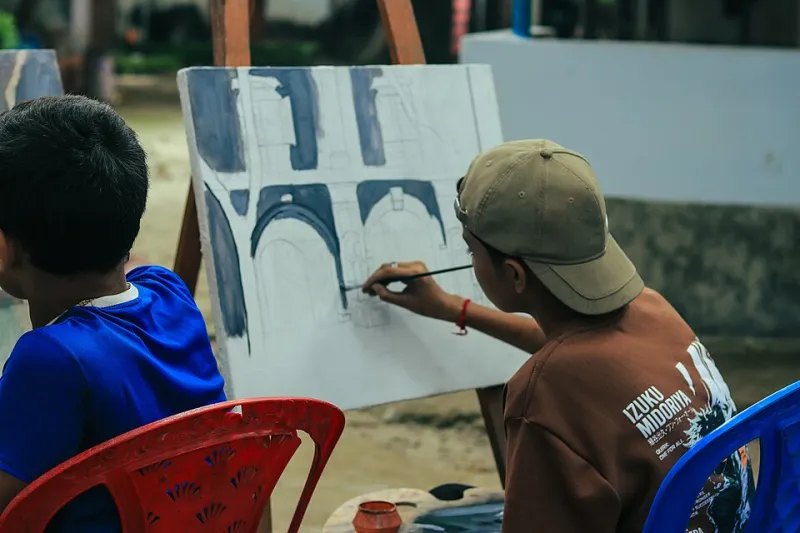
Photo: A S M Jobaer, CC BY-SA 4.0, via Wikimedia Commons
A Palette Packed for Darkness
When the April eclipse crossed central Texas, I did something no reasonable painter would advise: I packed a pochade box, drove three hours north of Austin, and set up an easel in a cow pasture alongside a few thousand strangers with cardboard glasses. My plan was simple to state and absurd to execute. I would paint totality. Not the memory of it, not a study made afterward from photographs. The thing itself, while it happened, in the four minutes and change the moon allotted me.
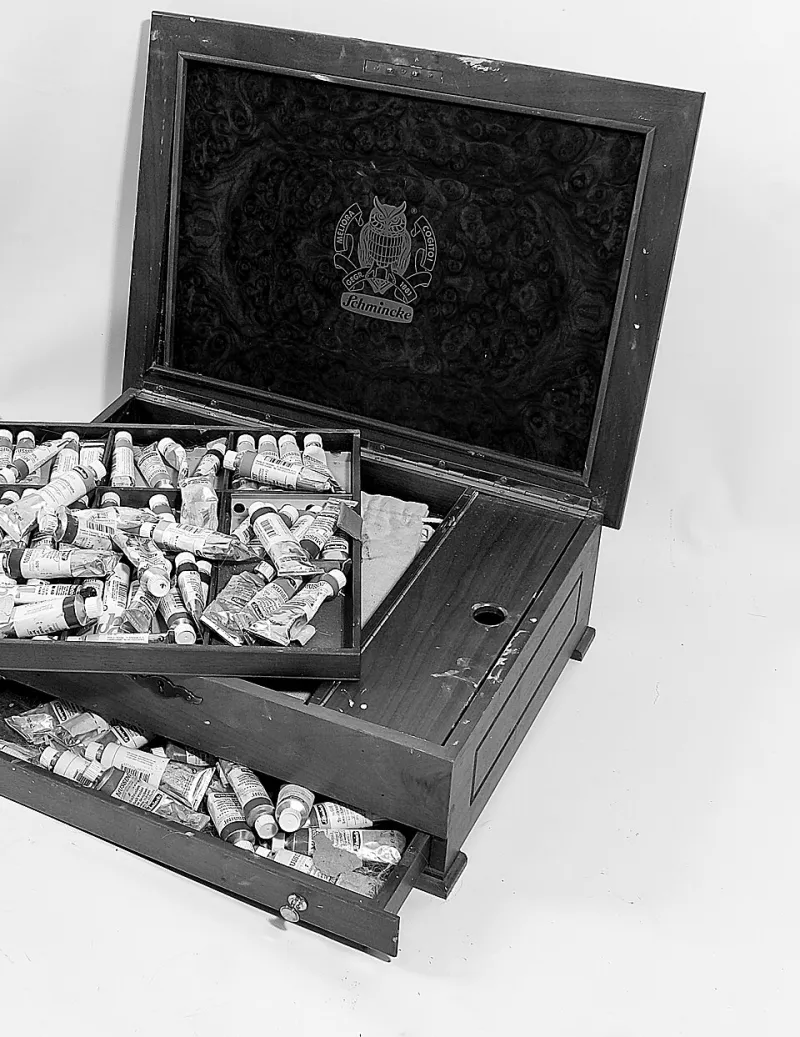
I had thought carefully about the palette. Too carefully, it turned out, about the wrong things. I brought ultramarine, cerulean, a warm yellow, burnt sienna, titanium white—the daylight kit I have used for fifteen years of plein air work from the Lebanon coast to the California foothills. What I failed to pack was any color for a sky that has never existed in my painting life.
The Sky Does Something Photographs Refuse to Show
Everyone knows the eclipse turns dark. What nobody tells a painter is how it darkens, and what the darkness does to every other color on the ground. The light does not dim evenly like a theater fading to black. It turns metallic. The whole landscape sits under a sheen I can only describe as looking through the underside of a spoon—cool, dense, faintly bruised. My warm yellows, mixed and ready on the palette, went suddenly dishonest. The grass beneath my feet was the wrong green for any green I owned.
I scraped off my beginning and started again as the crescents of light through the leaves—those little natural pinhole cameras in the tree canopy—began to thin. Around me, the crowd went quiet in a way that American crowds rarely do. Even the cicadas hesitated. I have painted in cemeteries and hospital rooms and border towns at dusk, and I have never stood inside a silence with that particular texture.
No Tube Contains the Corona
Then totality arrived, and the corona stood out against a black afternoon sky, and I understood I had brought the wrong box entirely.
The corona is silver, but it is not the silver of anything paintable. Titanium white is warm and opaque; the corona is cold and luminous, a light that appears to be generated inside the sky rather than reflecting off it. I mixed white with the faintest trace of cerulean and a breath of ultramarine, and got something like smoke. I tried a dot of the sienna to warm the lower corona. Wrong—too human, too much like candlelight. Every mixture I produced looked like a painting of an eclipse. Nothing looked like the eclipse.
There is a specific humiliation in watching four minutes of the most extraordinary light of your life while your palette offers you only the ordinary. I painted fast and badly and I do not regret a single stroke of it. The study I carried back to the studio is, objectively, not good. It is also the only painting I own that was made in the presence of what it depicts.
Urgency Is a Material
Back in the studio, I have been thinking about what totality taught me that slower work could not. Most of my practice is built on deliberation—glazing over weeks, revising the same corner of a canvas until the family archive of images inside it settles. The eclipse permitted no deliberation. It was the strictest teacher I have ever had: finish in four minutes or confess you didn't.
What surprised me was how the urgency changed my choices rather than just my speed. With no time to fiddle, I reached immediately for the color relationships that mattered and abandoned everything decorative. The umber shadows stayed umber. I did not nuance them. The eclipse sky got two notes, not twelve, and the painting is more honest for the poverty of its vocabulary.
I have since begun a series of small works—none larger than eight by ten inches—made under a timer, often in fading evening light, using palettes deliberately stripped to four or five tubes. I call them my totality studies even though none of them depicts the sun. They are about that condition: color under pressure, decisions made without the possibility of retreat.
Painting the Unrepeatable
A photograph of the eclipse exists by the millions now, and most of them are better than anything I could paint. But a photograph of totality and a painting attempted during totality are different objects entirely. One documents an event. The other documents a person failing, in real time, to keep up with the sky.
I hung the failed study above my work table, next to my mother's letters and the cobalt studies from the kitchen tiles of my childhood. It sits there as a corrective to my habits—a reminder that the studio, for all its comforts, is a place where time is theoretically unlimited and therefore easily wasted. The eclipse knew nothing of my deadlines or my exhibition schedule. It gave four minutes to everyone in the path, painter or not, and it did not extend them for anyone still mixing.
The next total solar eclipse over the continental United States comes in 2044. I will be a different painter by then, and I already know what I will pack differently: a cooler palette, a smaller panel, and the humility to accept that silver, true silver, lives only in the sky. The rest of us make do with white, and a memory, and four minutes of honest failure.