Corrugated Cathedrals: A Year of Trusting My Paintings to the American Postal System
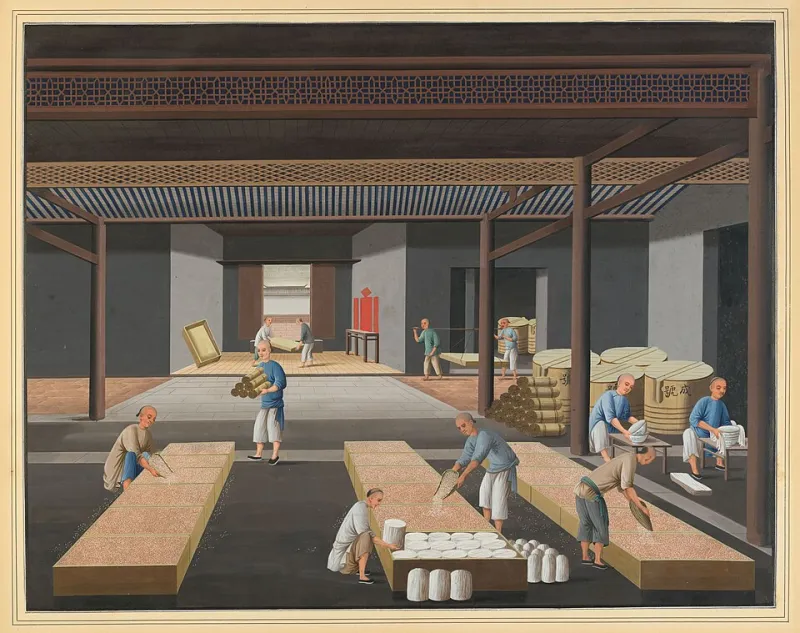
Photo: anonymous , Public domain, via Wikimedia Commons
The first painting I ever shipped alone went to a collector in Portland, Oregon, and I did everything wrong. I wrapped it in plastic, wedged it into a box two sizes too big, and prayed. It arrived fine, which taught me nothing, which is the most dangerous kind of arrival. It took three more shipments — one cracked frame, one lost tube, one water-stained canvas — before I understood that shipping art without gallery support is not a chore appended to the studio practice. It is the studio practice, extended through cardboard and ZIP codes.
The Box Is the First Frame
I now build every shipping container the way I once stretched canvases: ritually, with the same sequence of gestures. A double-wall box, cut down so the painting cannot travel more than an inch in any direction. Corner protectors cut from a spare sheet of foam board. Glassine against the surface, then a foam layer, then a plastic sleeve against moisture — because a painting crossing the Rockies in February may pass through humidity, freezing, and back again in a single trailer.
The mistake most first-time shippers make is generosity: too much space, too much padding, too much room for the contents to gather momentum. A painting should travel like a passenger in a seatbelt, not a marble in a jar.
For anything under 36 inches, I use flat-rate and standard USPS Priority boxes; the Post Office has carried more of my work to strangers than any dealer has. Above that, FedEx Ground has been the honest middle path. The specialty art shippers — the ones who build crates and drive in climate-controlled trucks — are wonderful, and for a large commission to Santa Fe last spring, worth every dollar. But they cost more than many of my paintings sell for. The math of the independent artist is unsentimental.
Insurance Is a Love Letter Written in Advance
I used to declare a low value and hope. Then a 30-by-40 canvas vanished between a hub in Memphis and a porch in Asheville, and the claim was denied because I had declared it at a fraction of its worth. The adjuster was not cruel. I had simply lied to the paperwork first.
Now every piece leaves with a declared value matching my actual price list, a printed invoice inside the box, and photographs taken the morning of shipment — front, back, edges, signature. I photograph the box being sealed. I photograph the label. This is not paranoia; it is a small archive of care, and it has turned two subsequent claims from arguments into transactions.
What the Carriers Taught Me
Each carrier is a personality. USPS treats small paintings like mail, which is to say with democratic indifference and surprising survival rates. FedEx tracking is granular enough that I can watch my work sit in a Kansas City facility for eleven hours and feel something close to companionship. The freight forwarders I finally tried for an oversized diptych taught me the word "soft-wrap" and charged me for the privilege, correctly.
The deepest lesson came from the failures. A tube arrived crushed; the painting inside, rolled on a wide enough core, survived. I had assumed fragility. The tube assumed resilience. Both were right about different things.
The Handoff
The strangest part of shipping your own retrospective-in-exile is that you never see the moment of arrival. A painting I made under this studio's north light now hangs above a fireplace in a house in Ohio I will never visit. I built its cathedral of corrugate, said nothing out loud, and handed it to a stranger in navy blue.
That is the transaction, in the end. Not the sale, not the claim form. The act of wrapping something you made in everything soft you own, and trusting the country's veins with it.